

IMI Get in touch
Knowledge · Talk · 10 min 45 s

Healthcare keeps the facts. It loses the story that connects them.

Keith Deutsch, IMI's co-founder and CTO, explains why healthcare's information architecture has a missing layer, why continuous monitoring makes the gap impossible to ignore, and what we are building at IMI to fill it.

Understanding a patient's condition increasingly depends not only on individual observations, but on the evolving relationships among observations, treatments, interpretations, and time.
Why watch

Six questions the talk answers

Each one starts with something every clinician already knows and ends somewhere most health IT has not gone yet.

Healthcare has systems of observation and systems of record. What falls between them?

Imaging, labs and monitoring answer specific questions. The EHR keeps the conclusions. Keith names what neither was designed to keep, and why it matters for every patient with more than one condition.
What does a patient's record leave out, even when every fact in it is correct?

An AV block, a pacemaker, a beta blocker, a cardiac MRI, an ED visit for dizziness, occasional palpitations. Six accurate entries. The patient behind them is Keith himself.

What happens when the same six facts are allowed to connect?

Watch them grow into a living network of tentative signals, caregiver notes, device trends and clinician hypotheses. It is the clearest picture of the context layer we have.

Why does continuous monitoring break the old cycle of care?

Observation, analysis, conclusion assumes a bounded episode. Wearables, implantables and caregiver reports never close the episode. Conclusions become working models instead of endpoints.

Consumer health apps already personalise. Why isn't that clinical context?

Personalisation inside one app is not a clinical patient model. Keith sets out the stricter burden: multi-source, provenance-aware, uncertainty-aware, and led by clinicians.

Why can't AI reason clinically from the EHR alone?

AI trained on the settled record can automate documentation and workflow. The closing section explains what clinical reasoning needs instead, and why AI is also what makes that possible.

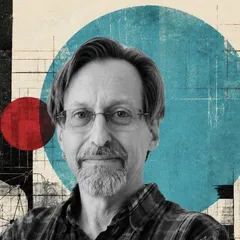
Portrait of Keith Deutsch

Keith Deutsch

Co-Founder & CTO, IMI · LinkedIn

MIT-trained engineer with 16 patents and 30+ years building frontier technology in IoT and health tech. He originated the "Active Context Graph" architecture for GE's Predix platform, the lineage behind IMI's context layer. After his own pacemaker and a cardiac MRI whose findings had nowhere to live, he set out to build the layer this talk describes.

Stories

The patients behind the context layer

Moments from the field and from the founders where the facts were all there, and the connection between them was not.

Want to go deeper with Keith?

Book time to talk through the architecture, or read how IMI's context layer works in practice. More talks and papers will be added to Knowledge as we publish them.