


IMI.ai uncovers the subclinical signals hidden in a patient's history and continuous data, and turns them into meaningful clinical insight.
Doctors can't use what never reaches them
What matters most never makes it into the EHR. A clinician holds only a handful of facts "live" at once: a recent lab, a symptom mentioned in passing, a medication changed months ago. Everything else has to be recalled at exactly the right moment to factor into a decision.
Data isn't the hardest part anymore. Finding the context is.
The question What tools do you have to understand relevant patient context from continuous data while care is occurring?
Understanding a patient's condition increasingly depends not only on individual observations, but on the evolving relationships among observations, treatments, interpretations, and time.
Clinical Context AI helps you understand a patient's condition through these evolving relationships, while care is occurring.
Watch Keith explain the ideaContext reduces time. Context reduces cost.
A single, static look at an MRI, then filing it away, is a costly waste, and patients pay the price. Observation was sparse. Diagnostic procedures were expensive. Monitoring was intermittent.
Meaning lives in the relationships between observations made across different devices, modalities, conditions, and points in time, not in any one of them alone.
Data without context is just static numbers
Healthcare's information systems preserve patient data, observations, diagnoses, and clinical decisions. But data without context never becomes information, and it never produces knowledge.
Context is large, dynamic, and living, just like a patient. Clinical artifacts are static. Observational systems and systems of record are static. We build the layer that isn't.
What Clinical Context AI can give us
What it means, right now
Context tells us what everything we currently know means for this patient, right now.
New insight into disease pathways
Relationships across observations surface how conditions actually unfold, not just how they present.
Treatment response, as it happens
An ongoing read on how a patient is responding, as part of a continuous process of interpretation rather than a one-time judgment.
Population-level patterns
Individual context, understood at scale, becomes a source of patterns across patients over time.
The context layer: a new pillar of clinical information infrastructure
Diagnostic observation
Generates observations
Scans, labs, and exams: discrete moments of measurement.
System of record
Preserves decisions
Diagnoses, orders, procedures: the stable clinical artifacts.
Context layer
Holds evolving understanding
The relationships between observations, treatments, and time, continuously updated.
See a continuously updated model of patient state, not a snapshot.
Let a scan from years earlier gain new relevance as patterns emerge in continuous observation.
Maintain the relationships among observations, treatments, interpretations, trajectories, and emerging hypotheses.
Draw on ECG streams, physiological monitors, implantables, neuromodulation platforms, and other continuously observing technologies while care is occurring.
How clinical reasoning is changing
Medicine was episodic
A patient presented with a concern, measurements were taken, a conclusion was reached, a treatment selected. If it worked, the episode ended. If not, the process began again. Conclusions functioned as endpoints; their purpose was to enable action.
Observation becomes ongoing
Conclusions stop being endpoints and start behaving like working models. New measurements arrive continuously. Treatments generate new observations while they're being administered. Prior observations acquire new significance as patterns emerge.
Reasoning becomes continuous
Observation, interpretation, and intervention are no longer cleanly separated. New observations shape interpretation. Updated interpretation shapes treatment. Treatment generates new observations, and a clinical conclusion changes with it.
What clinicians are telling us
Cardiology, hospital-at-home and clinical informatics leaders on what continuous data asks of them.
“We were always taught to reach a conclusion and act on it. The hard part now is holding a conclusion as something that keeps updating, without losing the ability to act.”

“A remote monitor is only as useful as our ability to connect what it shows today with what we already knew. Otherwise it's just another stream nobody has time to read.”

“The interesting findings are almost never in a single reading. They're in what changed, and when, and what else was happening at the time.”

Sample quotes with fictional names and institutions, to be replaced with your clinical partners' own words.
Built for the places continuous context changes the decision
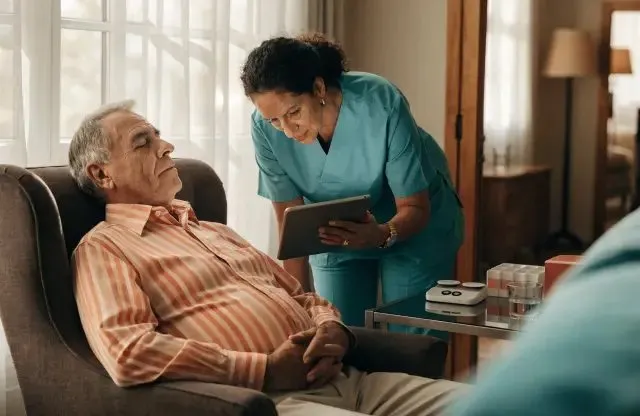
Hospital-at-home programs
When one condition's plan collides with another's.
Acute patients at home rarely have one condition. Decision support that reasons about only one can suggest changes the rest of their care can't safely take.
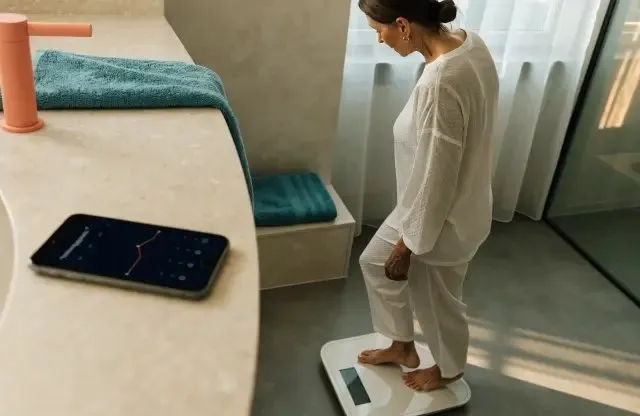
RPM and virtual-care vendors
When the danger sits below every threshold.
Threshold-based monitoring floods nurses with noise and stays silent on patterns that never cross a single line.

Digital health and AI builders
When your agent reads the record but not the patient.
Clinical agents fed raw records have to rediscover judgment on every call, and get it wrong.
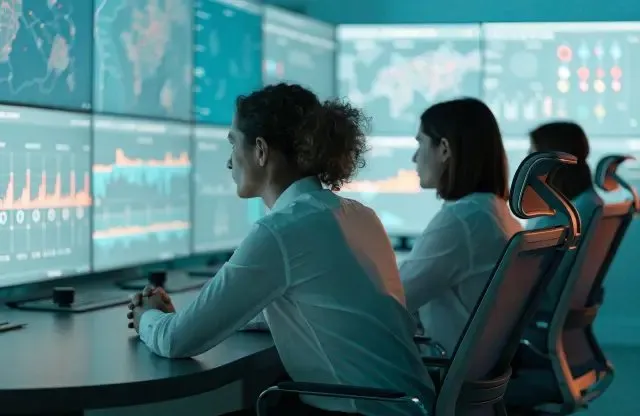
Health systems
When each vendor sees only its own slice.
Every program a patient touches judges its own data alone, missing what's happening one program over.